

The Leaders We Are Not Yet Developing
What leadership, talent, succession, assessment and performance systems must change for AI-enabled, project-shaped work.

PODCASTS | INTERVIEWS | PANELS | KEYNOTES
Explore Samia Waqar's podcasts, interviews, panels, speaking engagements and conversations on the Leadership Economy, artificial intelligence, leadership capability, strategy execution, project leadership and organizational transformation.
Speaking
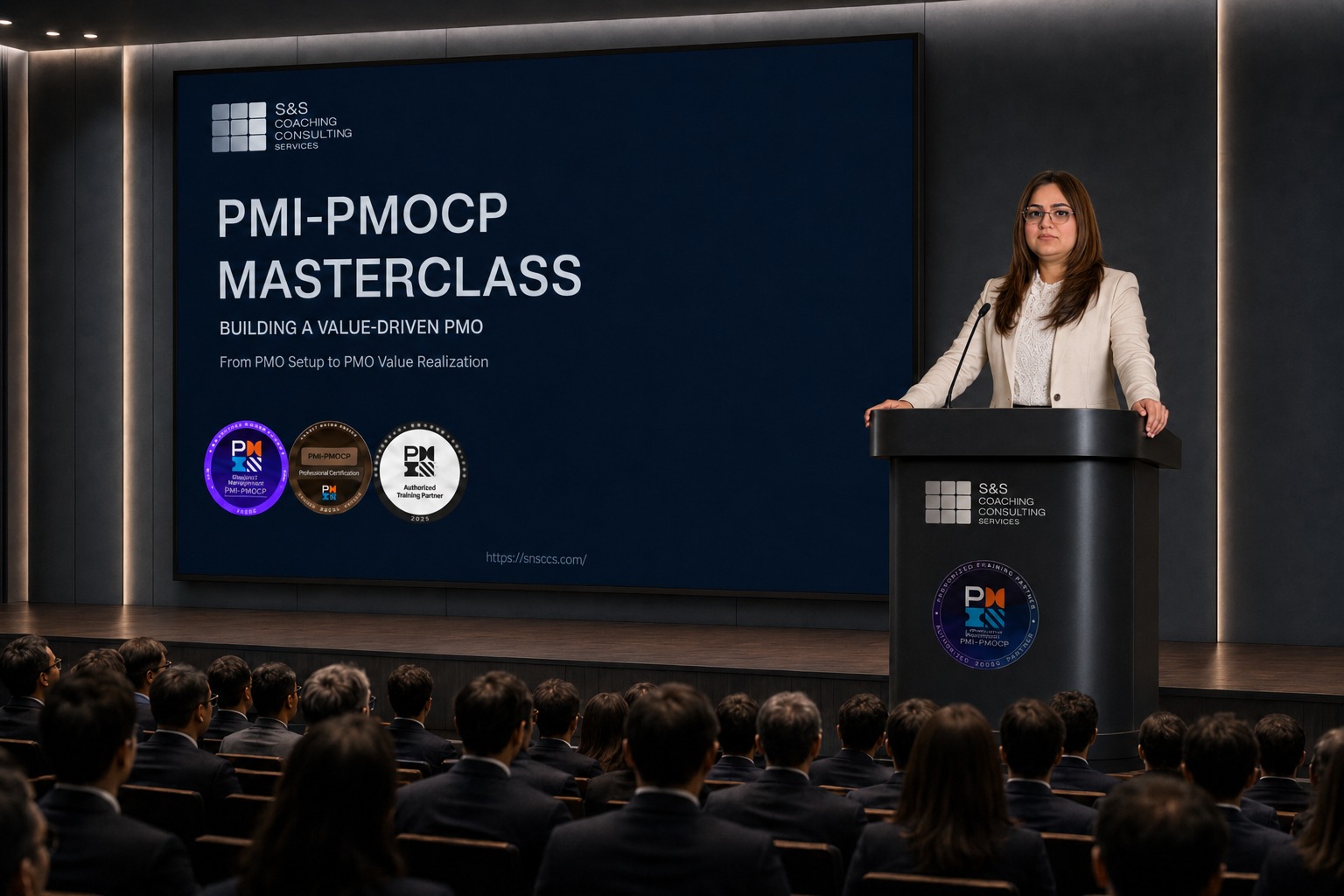
Samia delivers keynotes, executive briefings, panels, leadership sessions and workshops for organizations navigating AI, strategic transformation, executive sponsorship, PMO value and leadership-system change.
Signature keynote
As AI expands what organizations can analyze, automate and execute, the competitive difference increasingly shifts toward judgment, governance, decision rights, trust, adoption and accountability. This keynote introduces the Leadership Economy and challenges executives to examine whether their leadership systems are prepared for the work their technology and strategy now require.
Additional speaking topics
What leadership, talent, succession, assessment and performance systems must change for AI-enabled, project-shaped work.
Why technically successful AI initiatives can fail without trusted workflows, decision rights, operational ownership, adoption and benefits evidence.
The decisions, behaviours and governance practices effective executive sponsors must own without taking over the delivery team.
How the PMO can operate as a decision, integration, governance and value system rather than a reporting bureaucracy.
One model, four phases and twelve capabilities for leaders accountable for work they do not personally manage.
How senior teams diagnose before committing, make trade-offs, align work to capacity and stop, pause or resequence investment.
How role design, selection, development, succession, assessment, performance and governance must align with the work leaders now face.
Why leadership systems designed for stable roles are struggling with cross-functional, AI-enabled and transformation-intensive work.
Formats
Best-fit audiences include boards, CEOs, C-suite teams, CHROs, CIOs and AI leaders, CFOs, COOs, transformation leaders, PMO and portfolio leaders, professional associations, universities, executive-education programs, conference audiences and corporate leadership cohorts.
Speaking inquiry
Share your event, audience, objectives, preferred format, date, location and expected attendance. Speaking information and next steps will be provided after the request is reviewed.
Favourite passage
The synthesis can be stated simply. The AI Economy expands what organizations can do. The Project Economy changes how strategic work is organized. The Leadership Economy shapes whether technological capacity and strategic change produce responsible and sustained value. RAPL™ is the capability system designed for that responsibility.
Author note
I wrote The Leadership Economy because I kept seeing the same pattern.
Organizations had strong strategies, capable teams, major transformation investments and increasingly powerful AI, yet the value still did not land.
My purpose is not to argue that leaders create value alone. It is to help organizations see and build the leadership capability required to turn technological and strategic ambition into responsible and sustained value.
Question related to the book
Does this organization have the leadership capability to carry its technological and strategic ambition into responsible and sustained value?
Media resources
Samia Waqar is defining the Leadership Economy and developing the leadership capability organizations need to turn AI-enabled, project-shaped work into responsible and sustained value.
Samia Waqar is a leadership strategist, executive educator, author and creator of Role-Agnostic Project Leadership™. She is the founder and CEO of S&S Coaching and Consulting Services. Her forthcoming book, The Leadership Economy, examines the leadership capability organizations need to turn AI-enabled, project-shaped strategic work into responsible and sustained value.
Samia Waqar is a leadership strategist, executive educator, author and creator of Role-Agnostic Project Leadership™. She is the founder and CEO of S&S Coaching and Consulting Services, where her work connects leadership development, strategy execution, project and portfolio governance, organizational transformation and artificial intelligence. Drawing on experience across human capital, PMOs, complex initiatives, professional education and enterprise transformation, Samia developed RAPL™ to help organizations close the gap between the strategic work they must deliver and the leadership capability they have deliberately developed. Her forthcoming book, The Leadership Economy, introduces RAPL™ as a capability architecture for turning AI-enabled, project-shaped strategy into responsible and sustained value.
The Leadership Economy examines why work has changed faster than leadership systems. It proposes that as AI expands execution, analysis, coordination and option generation, leadership capabilities such as judgment, strategic choice, governance, integration, trust, adoption and accountability become increasingly consequential to whether technological and strategic capacity becomes responsible and sustained value. The book introduces Role-Agnostic Project Leadership™ as one model built around four phases and twelve capabilities for senior leaders.
Name: Samia Waqar
Role: Author | Leadership Strategist | Executive Educator | Founder and CEO
Location: Greater Toronto Area, Canada
Email: media@samiawaqar.com
LinkedIn: Samia Waqar
Suggested interview questions
Articles